
Autumn Concrete Pours: Cold Weather Tips for a Stronger, Longer-Lasting Finish
Autumn is one of the best times of year for pouring concrete, but it also brings changing weather conditions that need careful planning. Cooler temperatures slow the curing process, while increased rainfall, falling leaves and shorter daylight hours can all affect the quality of your finished concrete if they're not managed properly.
With the right preparation, autumn provides excellent conditions for achieving a durable, high-quality finish.
At Heeley Minimix, we supply ready mix concrete throughout Sheffield, Barnsley, Wakefield and the wider Yorkshire area all year round. Our experienced team can advise on mix selection, delivery timing and admixtures to help keep your project on schedule as the seasons change.
Whether you're laying foundations, pouring a driveway or constructing a commercial slab, these autumn concrete tips will help you achieve the best possible results.
Plan Around the Autumn Weather
Unlike summer, autumn weather can change rapidly throughout the day. Heavy showers, overnight frost and lower daytime temperatures all influence how concrete behaves after placement.
Before booking your delivery:
- Check the weather forecast carefully.
- Avoid pouring during prolonged heavy rain.
- Allow enough daylight for placing and finishing.
- Plan for overnight temperature drops.
Flexible delivery scheduling helps minimise weather-related delays. At Heeley Minimix, we offer reliable deliveries across Yorkshire, including small-load concrete for domestic projects and flexible scheduling to suit changing site conditions.
If you're unsure how much concrete you'll need, simply calculate:
Length × Width × Depth (in metres) = Cubic Metres
Our team is always happy to help confirm quantities before delivery. For more details on preparation and delivery guidelines, see our ordering concrete checklist.
Prepare the Site Before the Concrete Arrives
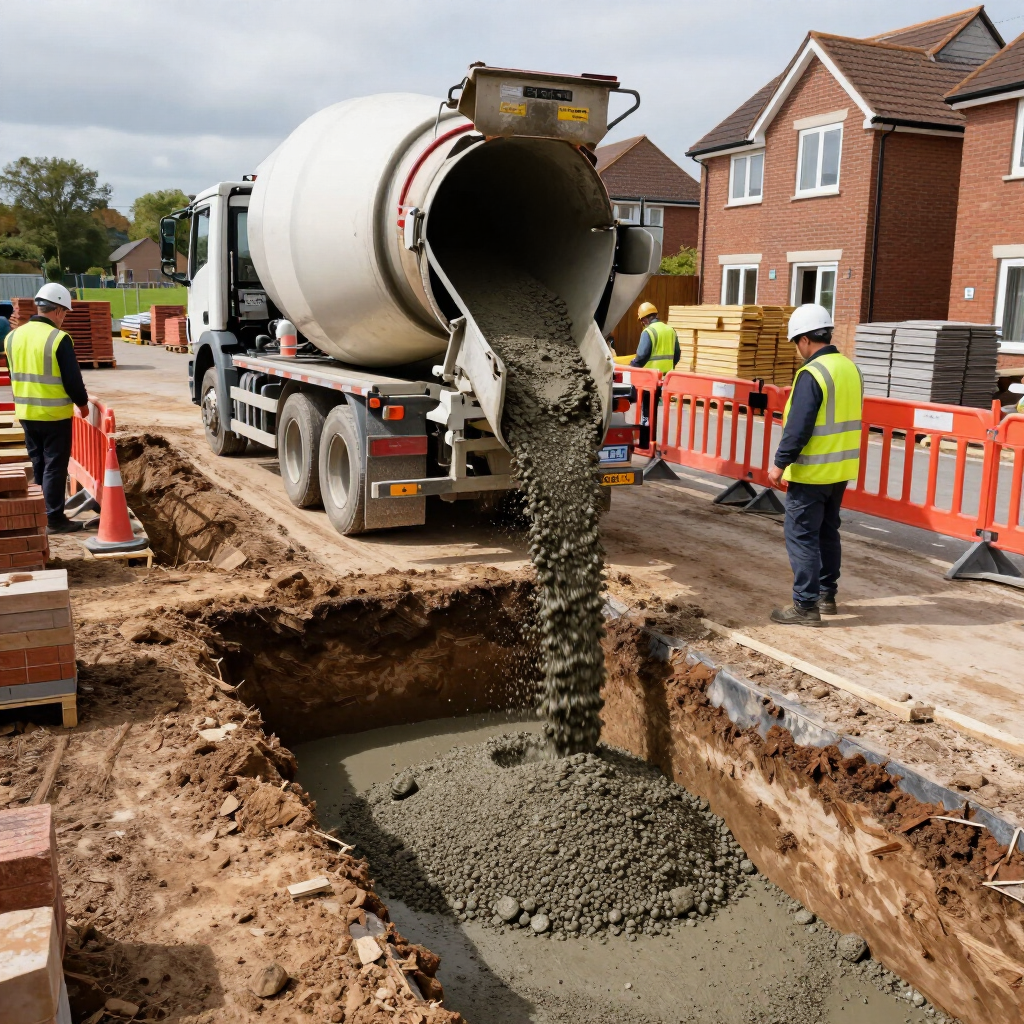
Good site preparation becomes even more important during autumn. Remove standing water from excavations before placing concrete and ensure the sub-base remains firm and well compacted.
It's also worth clearing away:
- Wet leaves.
- Mud.
- Loose debris.
- Excess surface water.
These materials can contaminate fresh concrete and affect the finished surface.
Ensure your team, equipment and access routes are ready before the delivery vehicle arrives, reducing delays during placement.
Rain Protection Matters
One of the biggest challenges during autumn is unexpected rainfall. Fresh concrete can tolerate light showers once it has begun to set, but heavy rain immediately after placement may:
- Wash cement from the surface.
- Increase surface dusting.
- Reduce durability.
- Create an uneven finish.
Always have protective sheeting available if rain is forecast.
Covering newly placed concrete quickly can prevent costly repairs while allowing curing to continue uninterrupted.
Choose the Right Concrete Mix
Cooler weather generally provides a more comfortable working window than summer, but lower temperatures can slow strength development.
Depending on your project, your concrete supplier may recommend:
- Standard ready mix concrete.
- Accelerating admixtures for colder days.
- Fibre-reinforced concrete to reduce shrinkage cracking.
- Higher strength mixes where specified by engineers.
Rather than adding water on site to improve workability, it's always better to use suitable admixtures that maintain the designed strength of the concrete.
Learn more about our Ready Mix Concrete service and available mix options.
Protect Fresh Concrete During Curing
Concrete gains strength through curing rather than drying. During autumn, curing takes longer because of cooler temperatures, making protection during the first few days particularly important.
To improve curing:
- Protect fresh concrete from heavy rain.
- Cover exposed slabs during cold nights.
- Prevent standing water collecting on the surface.
- Avoid unnecessary foot traffic until adequate strength develops.
Proper curing significantly improves durability while reducing the risk of surface defects.
Watch Overnight Temperatures
Late autumn can bring overnight temperatures close to freezing. Concrete should never be allowed to freeze before it has gained sufficient strength. If cold conditions are expected:
- Monitor overnight forecasts.
- Use insulating covers where necessary.
- Delay the pour if severe frost is likely.
- Discuss cold-weather admixtures with your supplier.
Planning around temperature changes helps protect both appearance and long-term performance.
Joint Cutting Still Requires Good Timing
Even in cooler weather, contraction joints should be cut at the correct time. Cutting too early may damage the surface, while cutting too late increases the likelihood of uncontrolled cracking.
The ideal timing depends on:
- Air temperature.
- Concrete mix.
- Wind conditions.
- Surface hardness.
Checking the slab regularly after placement helps identify the right moment for saw cutting.
Autumn Advantages for Concrete
Many contractors actually prefer pouring concrete during autumn because the cooler conditions offer several benefits.
These include:
- Reduced risk of rapid moisture loss.
- Longer finishing times.
- Lower chance of plastic shrinkage cracking.
- More consistent curing conditions.
- Improved working comfort for site teams.
Provided rainfall is managed correctly, autumn often produces excellent concrete finishes.
Why Choose Heeley Minimix This Autumn?
At Heeley Minimix, we help customers throughout Yorkshire complete successful concrete pours whatever the season. Our service includes:
- Reliable ready mix concrete deliveries.
- Small-load concrete for domestic projects.
- Flexible delivery times.
- Experienced local drivers.
- Practical advice on mix selection.
- Competitive pricing.
- Concrete supplied to your required specification.
Whether you're pouring foundations, driveways, patios or commercial slabs, we can help ensure you receive the right concrete at the right time. Visit Heeley Driveways and Patios to explore our patio and driveway services.
If you're budgeting for your next project, visit our Ready Mix Prices page for pricing guidance.
Frequently Asked Questions
Can you pour concrete in autumn?
Yes. Autumn is an excellent time to pour concrete, provided temperatures remain above freezing and fresh concrete is protected from heavy rainfall.
Is rain bad for freshly poured concrete?
Heavy rain immediately after placing concrete can damage the surface. Light rain after the concrete has begun to set is generally less problematic, but protection is always recommended.
Does concrete take longer to cure in autumn?
Yes. Cooler temperatures slow the curing process, meaning concrete may take longer to achieve its full design strength.
Should concrete be covered overnight?
If temperatures are expected to fall significantly or rain is forecast, covering freshly placed concrete helps protect the surface and supports consistent curing.
What is the best temperature for pouring concrete?
Concrete performs best when air temperatures are generally between 10°C and 20°C, making much of the autumn season ideal for placing concrete.
Plan Your Autumn Concrete Delivery with Heeley Minimix
Autumn offers excellent conditions for concrete construction when projects are planned around changing weather. By preparing the site properly, selecting the correct mix and protecting fresh concrete during curing, you can achieve a durable, professional finish that performs for years to come.
At Heeley Minimix, we supply high-quality ready mix concrete across Sheffield, Barnsley, Wakefield and the surrounding Yorkshire area, helping homeowners, builders and contractors complete projects with confidence throughout the autumn months.
To discuss your project, request a quotation or arrange delivery, visit our Ready Mix Concrete page or get a fast estimate through our Ready Mix Prices page.