
Driveway Concrete Thickness, Mix and Reinforcement Guide UK
Concrete Driveway Thickness, Mix and Reinforcement Guide UK
Driveway concrete: thickness, mix and reinforcement you actually need
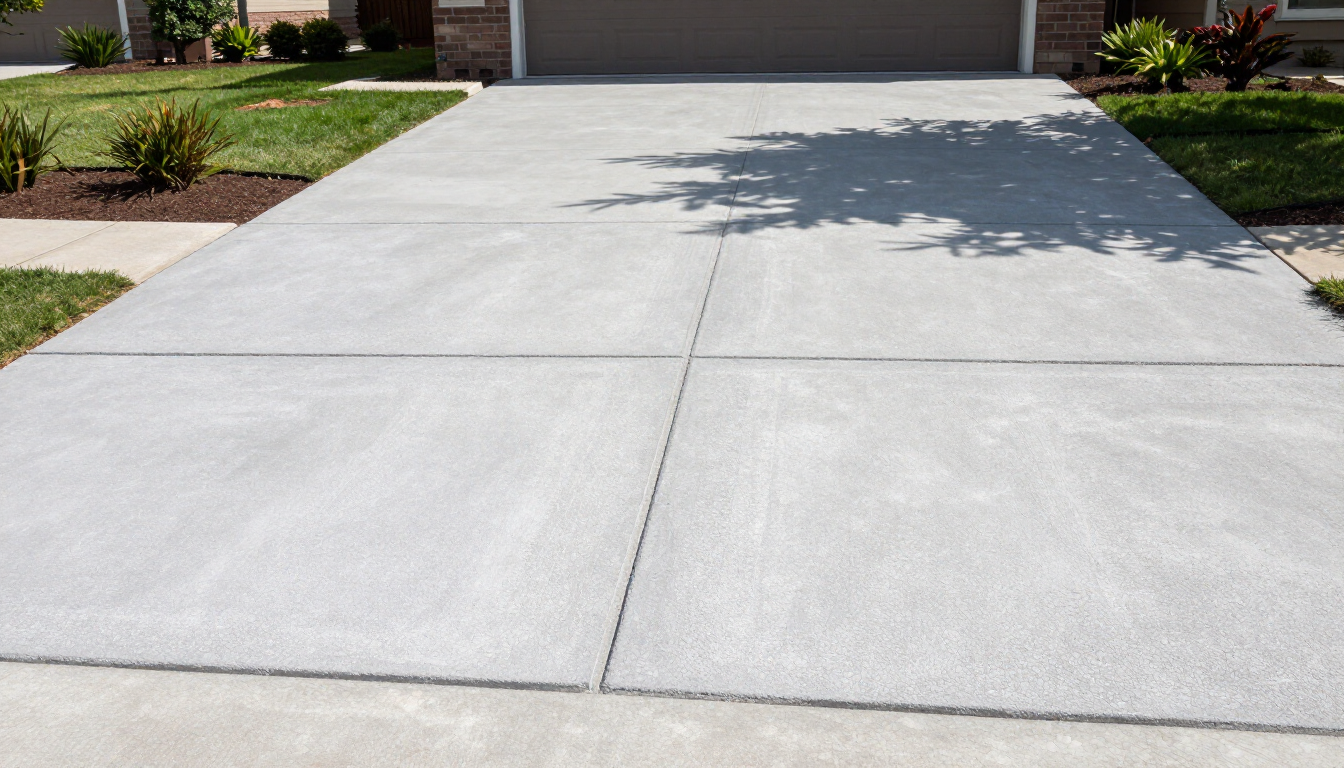
A good driveway should cope with years of parked vehicles, changing weather, frost, and daily use without sinking, cracking, or becoming uneven. The difference between a driveway that lasts and one that starts failing early usually comes down to five things: thickness, sub-base preparation, the correct concrete mix, sensible reinforcement, and proper curing.
At Heeley Minimix, we supply ready-mix concrete for domestic and commercial projects across Barnsley, Sheffield, Wakefield, and wider Yorkshire. Whether you are replacing a small domestic driveway or planning a larger vehicle access area, choosing the right specification early can save significant repair costs later.
How thick should driveway concrete be?
Thickness is one of the most important decisions because it affects durability, reinforcement needs, and overall performance.
Domestic cars and SUVs
For most UK domestic driveways carrying standard cars and SUVs, a slab thickness of:
- 125 mm (5 inches) is typically the safest recommendation
While some installers still use 100 mm, stepping up to 125 mm provides a better safety margin for:
- Freeze-thaw conditions
- Slight ground movement
- Occasional heavier loads
- Minor variations in sub-base quality
Vans and occasional heavier vehicles
If the driveway will regularly carry:
- Vans
- Delivery vehicles
- Larger SUVs
- Caravans or trailers
Then:
- 150 mm (6 inches) is usually the better choice
This is especially important near entrances and turning areas where loads concentrate.
Commercial vehicles and motorhomes
For heavier or repeated loading:
- 175 mm to 200 mm may be required
At this point, reinforcement design and sub-base preparation become even more important.
Is 4 inches of concrete enough for a driveway?
In many cases, no.
A 100 mm slab can work under ideal conditions, but UK weather and typical domestic use often justify a thicker slab. If your budget allows, increasing to 125 mm provides noticeably better resilience and lifespan.
The importance of the sub-base
Concrete performs only as well as the foundation beneath it.
For most UK driveway installations:
- Use 150 mm to 200 mm of compacted MOT Type 1 sub-base
- Compact in layers for proper density
- Remove soft spots before pouring
- Add a thin blinding layer for uniform support
On weaker or clay-heavy ground, a geotextile membrane can help prevent movement and contamination of the sub-base.
Good preparation reduces:
- Settlement
- Cracking
- Water pooling
- Edge failure
Choosing the right concrete mix: C25 vs C30
Concrete strength in the UK is commonly specified using compressive strength classes such as C25 and C30.
C25 concrete
C25 is often the ideal choice for standard domestic driveways where:
- The base is properly prepared
- Thickness is adequate
- Vehicle loads are moderate
It offers a good balance between strength, workability, and cost.
C30 concrete
C30 provides higher strength and durability.
It is worth considering when:
- Vans or heavier vehicles will use the driveway
- The slab includes tighter joint spacing
- Exposure to de-icing salts is likely
- Additional long-term durability is desired
Which is stronger: C25 or C30?
C30 is stronger than C25.
For many domestic driveways, C25 performs perfectly well when combined with the correct slab thickness and preparation. For heavier use or extra durability, C30 provides additional margin.
At Heeley Minimix ready-mix concrete services, we help customers select the most appropriate mix for their site conditions and intended vehicle loads.
Additives that improve driveway performance
Modern concrete mixes can include additives that improve durability and workability.
Fibres
Polypropylene fibres help reduce:
- Plastic shrinkage cracking
- Surface cracking during curing
- Minor impact damage
For many domestic driveways, fibres are an excellent upgrade.
Air entrainment
Air-entrained concrete improves resistance to:
- Frost damage
- Freeze-thaw cycling
- Surface scaling during winter
This is particularly useful for exposed driveways in colder areas.
Plasticisers
Plasticisers improve workability without adding extra water, helping maintain strength while making placement easier.
Should you use mesh reinforcement?
Reinforcement helps control crack widths and improves slab performance under load.
Fibres only
For standard domestic driveways carrying cars only:
- Fibres alone are often sufficient
Steel mesh reinforcement
For heavier use or larger slabs, steel mesh such as:
- A193
- A252
can provide additional crack control.
Correct placement matters:
- Mesh should sit in the upper third of the slab
- It must be supported on spacers
- Mesh left on the ground provides little benefit
For van use or variable ground conditions, combining fibres with steel mesh is often a sensible approach.
Joints, falls, and drainage
Concrete naturally expands and contracts with temperature and moisture changes. Joints help control where cracks form.
Control joints
Saw-cut joints should generally be introduced:
- Within 24 to 36 hours after pouring
Spacing should usually be:
- Around 3 to 3.75 metres for a 125 mm slab
Keeping panels roughly square improves crack control.
Isolation joints
Isolation joints should be installed around:
- Drain covers
- Walls
- Steps
- Inspection chambers
to reduce restraint cracking.
Falls and drainage
Driveways should include falls of approximately:
- 1:60 to 1:40
to ensure water drains correctly.
Depending on local planning requirements, permeable drainage or soakaway systems may also be needed for front garden hardstanding.
Finishing for grip and winter durability
The surface finish affects both safety and lifespan.
Brush finish
A light brushed finish offers:
- Reliable grip in wet conditions
- Better traction during winter
- Practical long-term durability
Pattern imprinted concrete
Decorative finishes can also perform well when correctly sealed and maintained.
Avoid overworking the surface with excess water or slurry, as this weakens the top layer and increases the risk of winter scaling.
Curing matters more than many people realise
Concrete gains strength through curing, not simply by drying out.
To achieve proper durability:
- Protect the slab from rapid moisture loss
- Use curing compound or polythene sheeting
- Avoid early overloading
Typical curing guidance includes:
- Foot traffic after 24 to 48 hours
- Cars after roughly 5 to 7 days
- Heavier vehicles after 10 to 14 days
- Full design strength at approximately 28 days
Cold weather pours may require winter-grade mixes or accelerators.
Our team can advise on realistic concrete curing times and delivery planning for Yorkshire conditions.
Ordering concrete and planning delivery
To estimate concrete volume:
- Measure length × width × depth
- Convert depth to metres
- Add a small contingency allowance
Tight-access sites often benefit from smaller delivery vehicles.
At Heeley Minimix, we specialise in:
- Minimix deliveries
- Tight-access pours
- Flexible scheduling
- Small domestic loads
- Weekend and out-of-hours deliveries
If you need pricing guidance, our
ready-mix concrete pricing information can help you plan volumes and budgets more accurately.
Quick FAQ
Is 4 inches enough for a driveway?
Usually not for long-term durability in UK conditions. 125 mm is typically a safer domestic specification.
What is the best concrete mix for a driveway?
For most homes, C25 with fibres provides an excellent balance of strength and value. C30 is better for heavier loads or additional durability.
Which is stronger: C25 or C30?
C30 is stronger than C25.
Do driveway slabs need reinforcement?
Many benefit from fibres, steel mesh, or both depending on thickness, ground conditions, and vehicle loads.
Summary and next steps
A durable driveway depends on the entire system working together:
- Properly compacted MOT Type 1 sub-base
- Correct slab thickness
- Suitable concrete strength
- Sensible reinforcement
- Effective joints and drainage
- Careful curing
Done properly, a concrete driveway can handle years of weather and vehicle traffic with very little maintenance.
At Heeley Minimix, we help homeowners, builders, and contractors choose the right ready-mix concrete for driveways across Barnsley, Sheffield, Wakefield, and Yorkshire.
If you would like advice on thickness, reinforcement, additives, or delivery planning,
get in touch for a straightforward, no-obligation chat.